
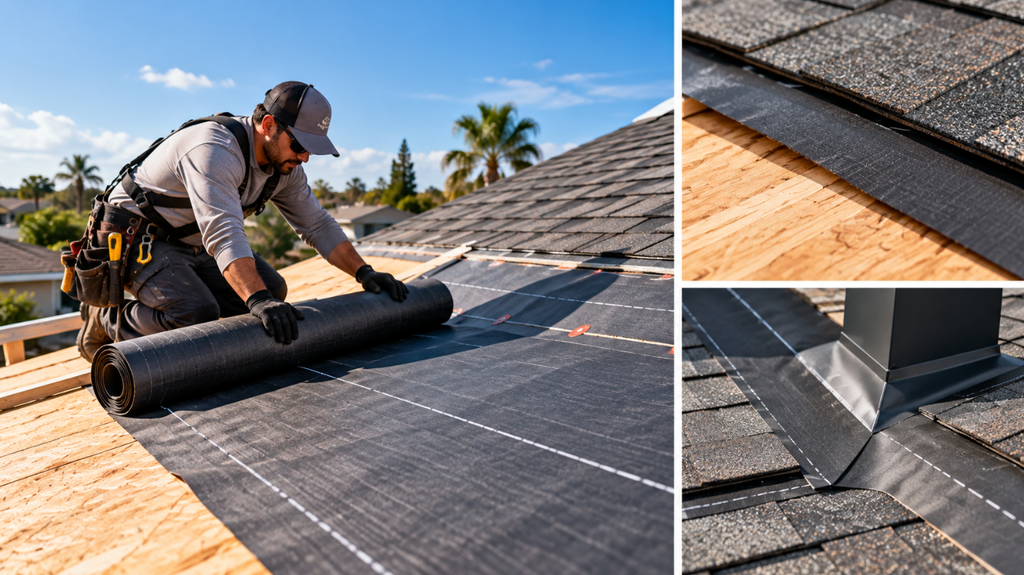
Missing shingles leave a gap in the top layer of a roof, and each gap exposes the layer underneath to sun and rain. In a rainy, humid climate like the Houston area, that exposure can turn a small fix into a larger repair, so it helps to know what each layer does.
What the Layers Do
Shingles shed water and shield the underlayment below them. The underlayment is a backup layer, and it is not built to sit in the open for long. Once it breaks down, water can soak the wood decking and reach the attic.
Why Shingles Go Missing
Strong wind is the most common cause, and it does the most damage at roof edges and ridges. Older shingles that have lost their seal strips can blow off in a moderate storm, and poor nailing, falling branches and age-related wear also play a role.
Patching a Few Shingles
A roofer can usually replace a few missing shingles when the rest of the roof is in good shape. The main challenge is matching color and style, because older shingles fade over time, and pieces saved from the yard help with the match. Many missing shingles or a roof near the end of its life can make a larger repair or replacement worth discussing.
The Next Steps
Photos from the ground record the bare spots, and ceilings are worth watching for new stains after rain. Neighbors’ roofs can also offer clues, since one storm often damages several homes in the same area, and an inspection before the next storm keeps the gap from growing.
Homeowners in Sugar Land and the Houston area can schedule an inspection with Roof Masters to replace missing shingles and check for hidden damage, with a free estimate after the inspection.


More Stories
Space Saving Small Kitchen Improvement Ideas That Actually Work
Stunning Kitchen Remodel Ideas That Will Blow Your Mind
Transform Your Space: Creative & Budget-Friendly Home Remodeling Ideas